



Tips for Creating a Cosy and Productive Home Office Environment
Creating a home office that is both cosy and productive can greatly improve your work experience and efficiency. Whether you’re working remotely permanently or just occasionally, having a space that feels inviting yet professional helps you maintain focus and balance. In this post, we’ll explore practical ideas and simple adjustments to make your home office a place you enjoy being in, while also supporting your work goals.
Why a Cosy and Productive Home Office Matters
When your workspace feels comfortable and welcoming, it can reduce stress and increase your motivation. On the other hand, a cluttered or uncomfortable space may lead to distractions, discomfort, and less efficient work sessions. A carefully designed office supports your posture, keeps distractions at bay, and inspires creativity – all vital for sustained productivity.
Choosing the Right Location
Find a Quiet Spot
The first step is to select a location in your home that is relatively quiet and free from high foot traffic. This could be a spare bedroom, a corner of the living room, or even a section of your kitchen. Consider how often you’re interrupted and the noise levels throughout your working hours.
Access to Natural Light
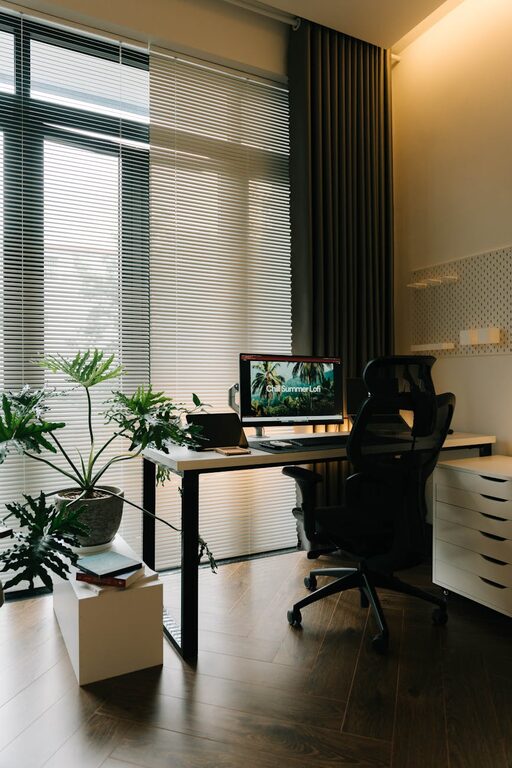
Natural light not only improves mood but also reduces eye strain. Position your desk near a window if possible. If natural light is limited, consider full-spectrum bulbs that mimic daylight.
Furnishing Your Office for Comfort and Function
Invest in an Ergonomic Chair
Comfort is crucial when spending long hours seated. Choose a chair that supports your back, encourages good posture, and is adjustable to your height and desk setup.
Choose a Suitable Desk
Your desk should offer enough surface for your computer, documents, and any other tools you need regularly. Consider the layout – can you easily reach everything without straining? Standing desks or desks with adjustable height options are becoming increasingly popular for health and comfort.
Organise with Storage Solutions
Clutter can quickly diminish productivity. Use filing cabinets, shelves, trays, or boxes to keep your workspace tidy and materials organised. Label storage options to find items quickly.
Lighting and Ambience
Balance Natural and Artificial Lighting
In addition to natural light, make sure your workspace is well-lit with desk lamps or overhead lighting. Soft, warm light can create a relaxing atmosphere, but ensure it’s bright enough to prevent eye fatigue.
Consider Colour Psychology
Soft, calming colours like blues and greens promote focus and relaxation. You might paint a wall or use accessories in these shades to enhance your environment.
Add Personal Touches
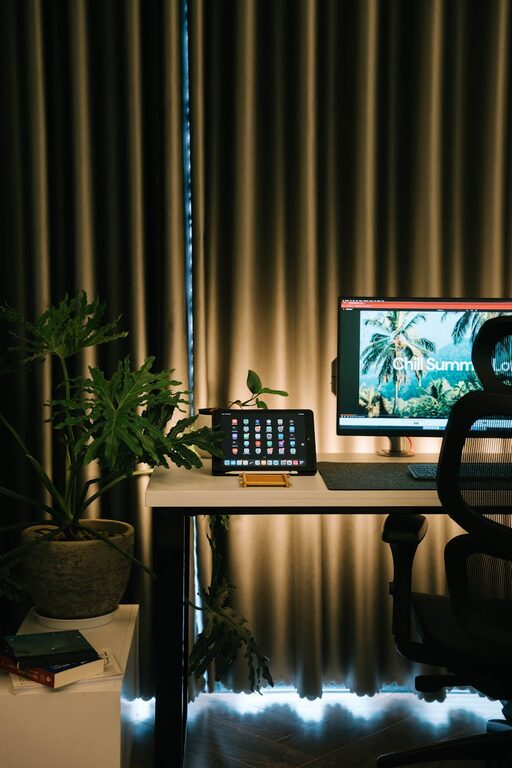
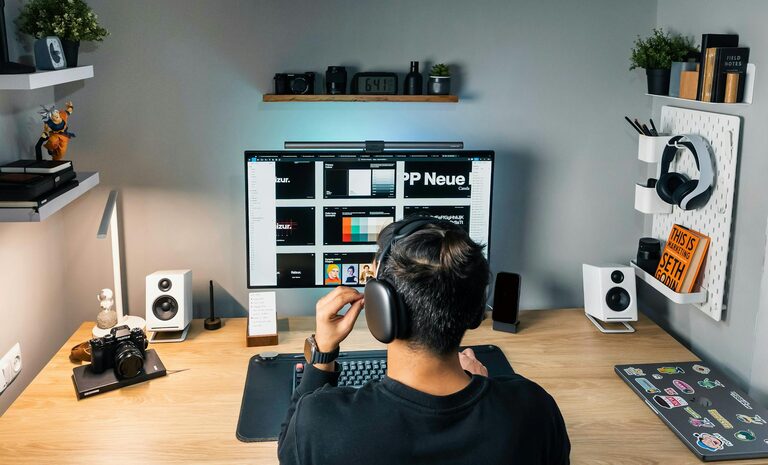
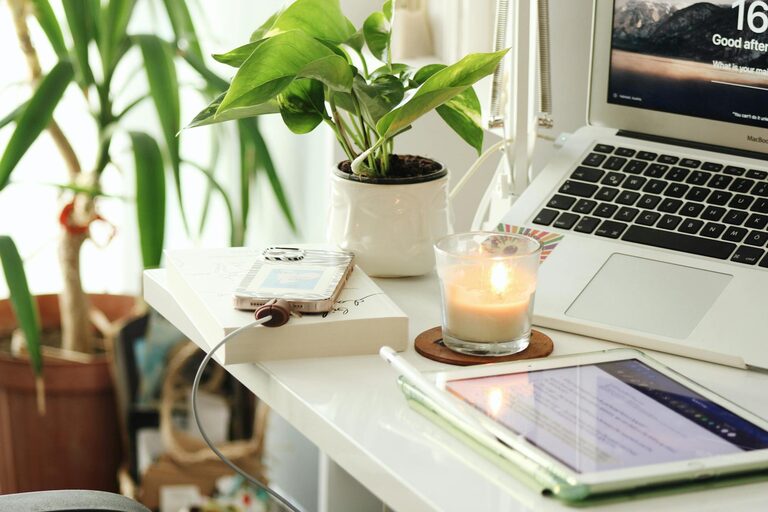
Incorporate items that make you feel comfortable but don’t clutter your desk. Photos, plants, or artwork can create a welcoming atmosphere without distracting you.
Minimise Distractions
Manage Noise Levels
If your home environment is noisy, try noise-cancelling headphones, white noise machines, or background music that helps concentration.
Control Digital Interruptions
Turn off non-essential notifications on your devices, and consider apps that block distracting websites during work hours.
Incorporate Plants and Natural Elements
Indoor plants improve air quality and add a refreshing touch to your office. Choose low-maintenance varieties such as snake plants or succulents if you’re not confident with plant care.
Maintain Good Air Quality
Open a window when possible to circulate fresh air. If that’s not an option, consider an air purifier to keep your space feeling fresh and energising.
Establish a Routine and Boundaries
Define Working Hours
Set clear start and finish times for your workday to separate your home life from work life.
Use Your Office Space Exclusively for Work
Where possible, avoid eating or relaxing in your home office. This helps your brain associate the space specifically with productivity.
Keep Healthy Habits in Mind
Remember to take regular breaks, stretch your body, and stay hydrated. These small habits boost focus and prevent fatigue.
Final Thoughts
A cosy and productive home office doesn’t have to be expensive or complicated. Small changes to your environment, furniture, lighting, and routine can make a big difference. Prioritise comfort, organisation, and personal preferences to build a workspace that supports your best work every day.
By thoughtfully crafting your home office, you’re investing in your wellbeing and efficiency – making work from home a more enjoyable and rewarding experience.